Google Maps

 Waze Maps
 Apple Maps
 All calls are free of charge
 765 22 88
 765 22 88
 765 22 88
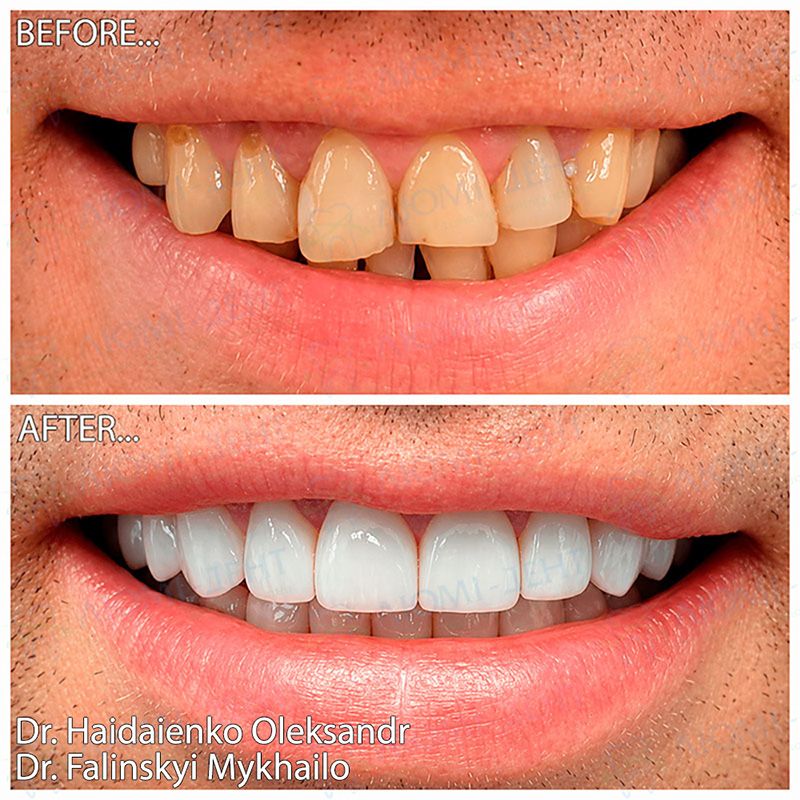


In this case, the patient was concerned about severe tooth discoloration, chips in the anterior region, irregular tooth shape, and a worn appearance of the teeth.
In addition, morning fatigue of the chewing muscles and signs of functional overload of the dentofacial system were noted.
During the examination, enamel discoloration, wear of the incisal edges, microchips, and alterations in the anatomical shape of the teeth were identified.
A temporomandibular joint and muscle dysfunction associated with improper distribution of chewing forces was also diagnosed.
Treatment began with gnathological diagnostics using the T-Scan system and chewing muscle deprogramming to determine the optimal position of the lower jaw.
After a comprehensive examination and digital 3Shape scanning, future smile design was performed, and a Wax-Up was created to approve the shape of the future restorations.
Then, under the control of an operating microscope, the teeth were prepared and permanent metal-free ceramic veneers were bonded.
Result:
The proper tooth shape was restored, chips and enamel discoloration were eliminated, and the smile regained its natural aesthetics and harmonious proportions.
After normalization of the occlusal contacts, the overload on the anterior teeth was reduced, discomfort in the chewing muscles decreased, and the smile gained a younger and healthier appearance.
Learn more about comprehensive smile restoration with veneers.
Treatment was performed by:
|
The prosthetic stage was performed by prosthodontist |
Gnathological supervision was provided by gnathologist |