Google Maps

 Waze Maps
 Apple Maps
 All calls are free of charge
 765 22 88
 765 22 88
 765 22 88


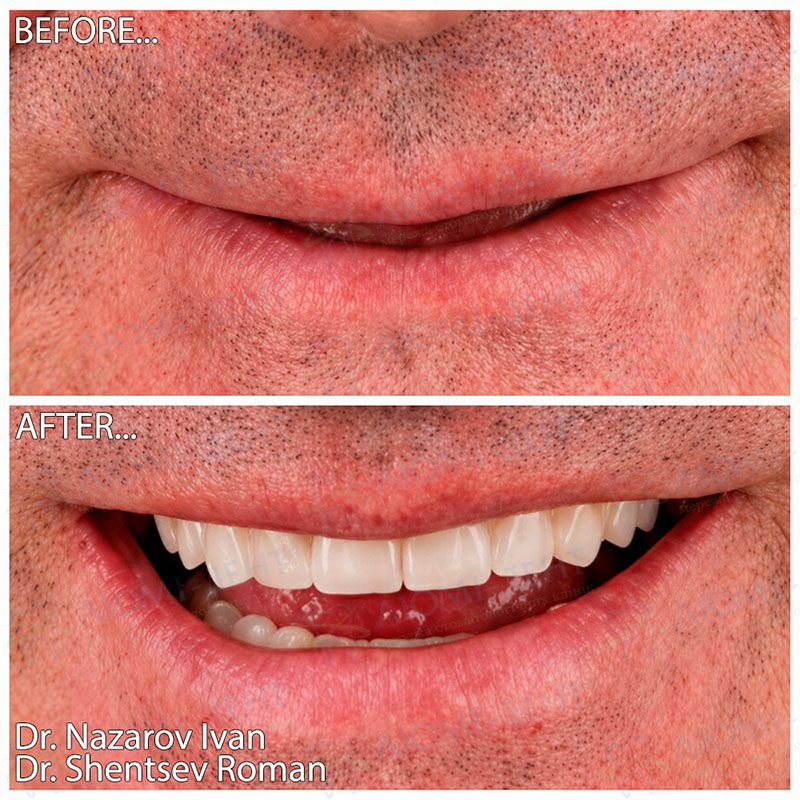
In this case, the patient was concerned about several missing teeth, impaired smile aesthetics, and discomfort in the temporomandibular joint area.
Therefore, treatment was aimed not only at replacing the missing teeth but also at restoring the proper function of the entire stomatognathic system.
Following comprehensive diagnostics including CT imaging, 3Shape digital scanning, and treatment planning, the first stage involved orthodontic treatment.
This made it possible to align the teeth, improve occlusal relationships, and reduce functional overload of the temporomandibular joints.
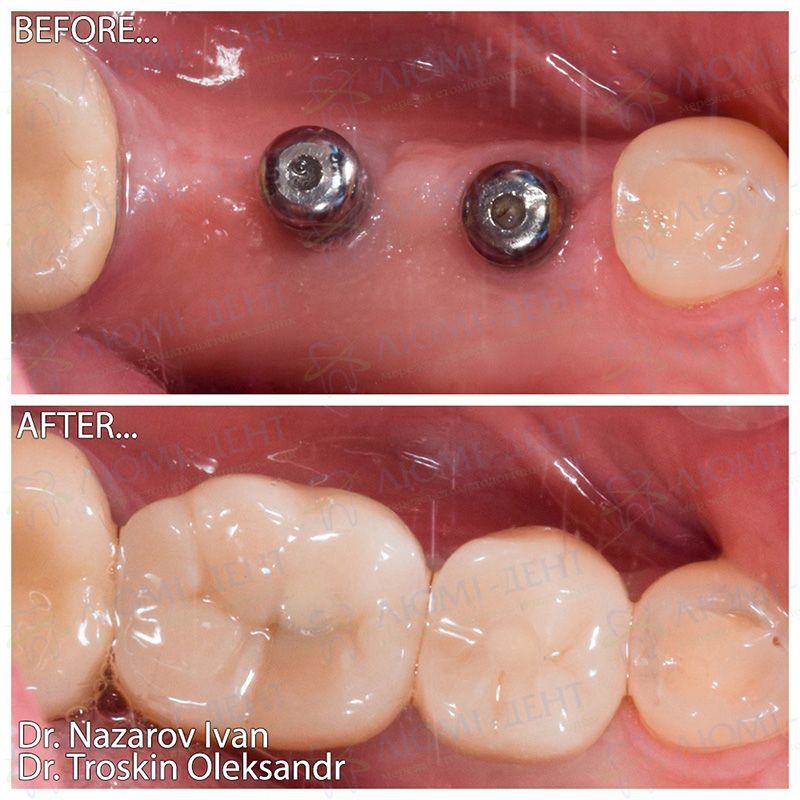
After completion of the preparatory stage, Straumann implants were placed in the areas of missing teeth 1.2, 2.2, 3.6, and 3.7 using a customized surgical guide.
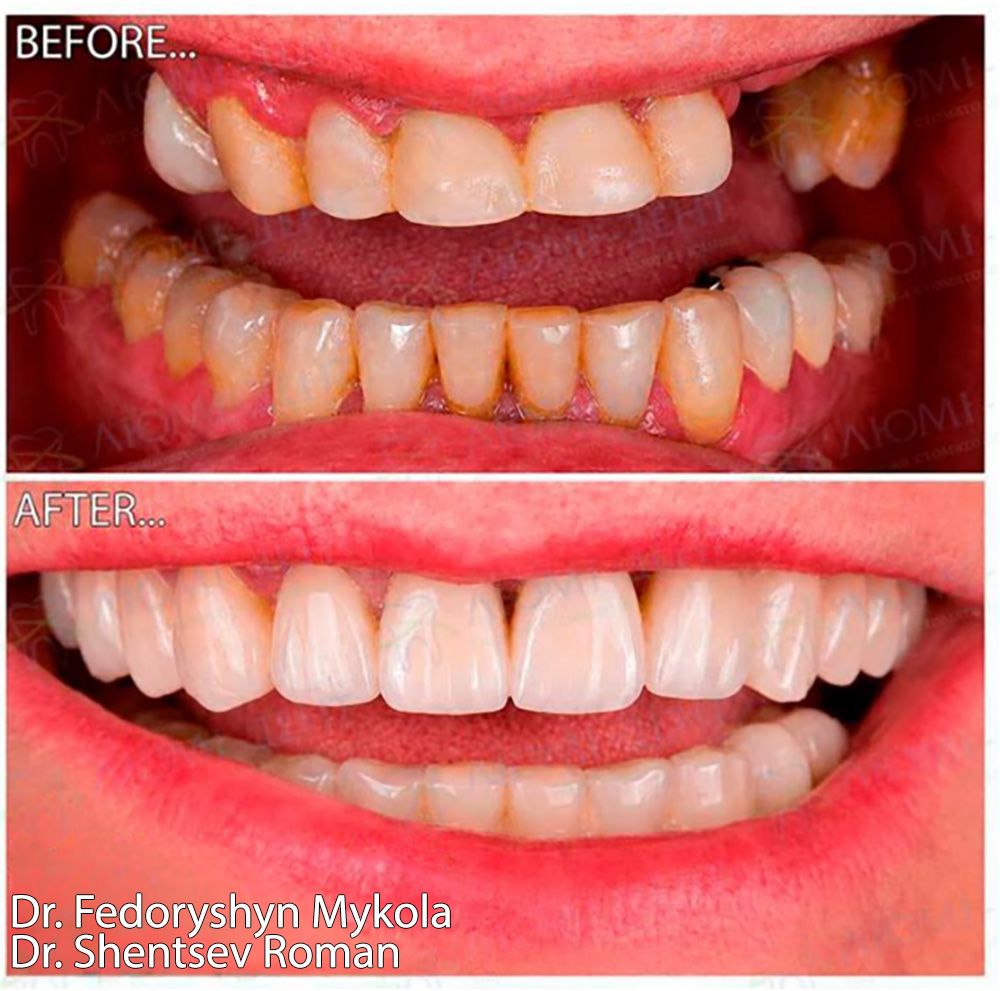
At the final stage, prosthetic rehabilitation was completed with zirconia restorations supported by implants, restoring both the integrity of the dental arches and chewing function.
Result:
The missing teeth were restored, chewing dysfunction was eliminated, and aesthetic concerns were resolved.
The patient was also able to eliminate pain and clicking in the temporomandibular joint area and achieve a harmonious smile.
In some cases, dental implantation is only one part of comprehensive treatment that may also include orthodontic and gnathological preparation.
Learn more about dental implants and comprehensive oral rehabilitation.
Treatment performed by:
|
The surgical stage was performed by oral and implant surgeon
|
The prosthetic stage was performed by prosthodontist
|